EN
EN  FR
FR  DE
DE  RU
RU  JA
JA  AR
AR  ES
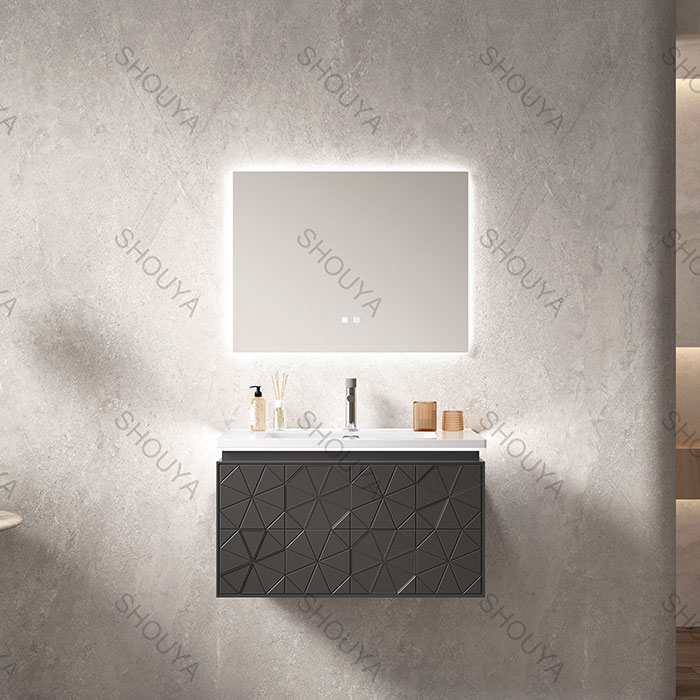
ES In the world of bathroom design, the debate between floor-standing and wall-mounted bathroom vanities reflects decades of human exploration, highlighting the tension between functionality and aesthetics. To truly understand this “duel of the century,” we need to trace the history of the bathroom vanity, exploring how it has evolved from a simple storage tool to a central influence on home style and lifestyle.
Historical evolution: the evolution of function and aesthetics
The history of bathroom cabinets can be described as an evolutionary quest for a balance between efficiency and aesthetics in bathroom spaces. Before the mid-20th century, floor-standing bathroom cabinets virtually dominated the global residential market. This design, directly connected to the floor, inherited the principles of traditional furniture construction—stable structure, ample storage space, and zero wall-mounted installation—perfectly suited to the demands of the post-war era of rapid construction. At the time, bathrooms were considered purely functional areas, with little attention paid to their aesthetic value.
A turning point came in the 1970s, when the wave of modernist design swept the architectural world. The “form follows function” philosophy gave rise to the rise of wall-mounted bathroom cabinets. European designers pioneered the concept of suspended cabinets in the bathroom, creating a new style with suspended bottoms. This innovation not only challenged traditional craftsmanship but also fundamentally altered the dynamics of bathroom space. German bathroom brands pioneered the use of honeycomb aluminum panels and waterproof composite panels, overcoming the technical bottlenecks of cabinet load-bearing and moisture-proofing, transforming the suspended design from a concept into reality.

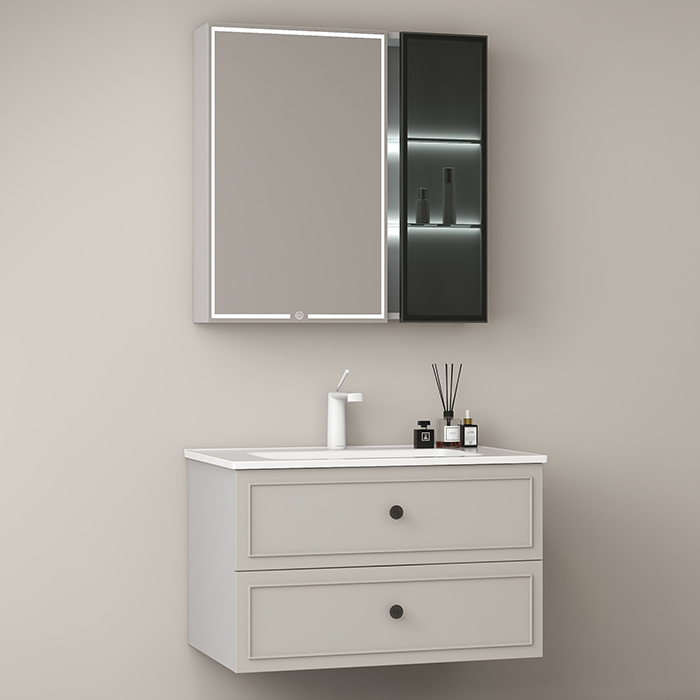
In the 21st century, with the prevalence of smaller homes and the maturity of dry and wet area separation technology, the suspended bathroom cabinet style experienced explosive growth. Market data shows that the proportion of suspended bathroom fixtures in new homes built after 2020 has reached 65% in East Asian countries and has exceeded 72% in Europe. This trend reflects modern people’s redefinition of bathroom space, evolving from a purely functional space to a spiritual haven for self-healing.
Core Function Showdown: The Triangle Game of Space, Moisture-Proofness, and Cleanliness
Space Utilization Efficiency
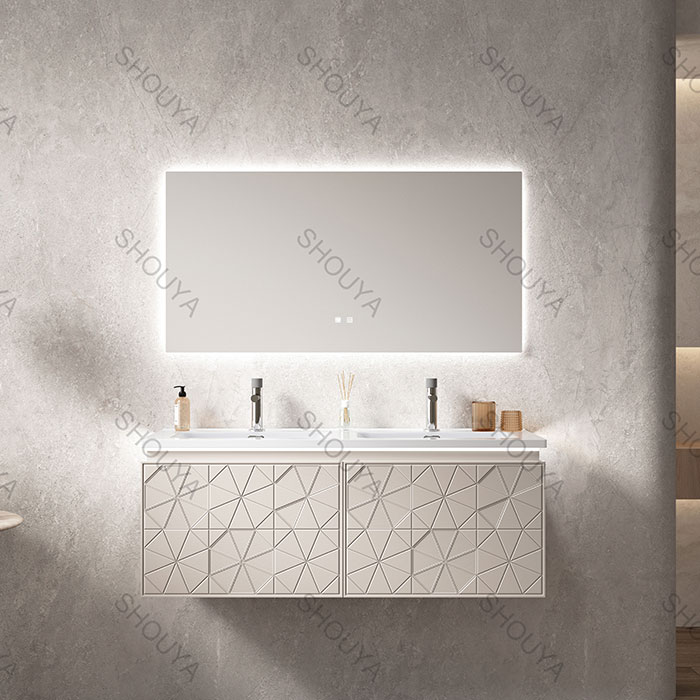
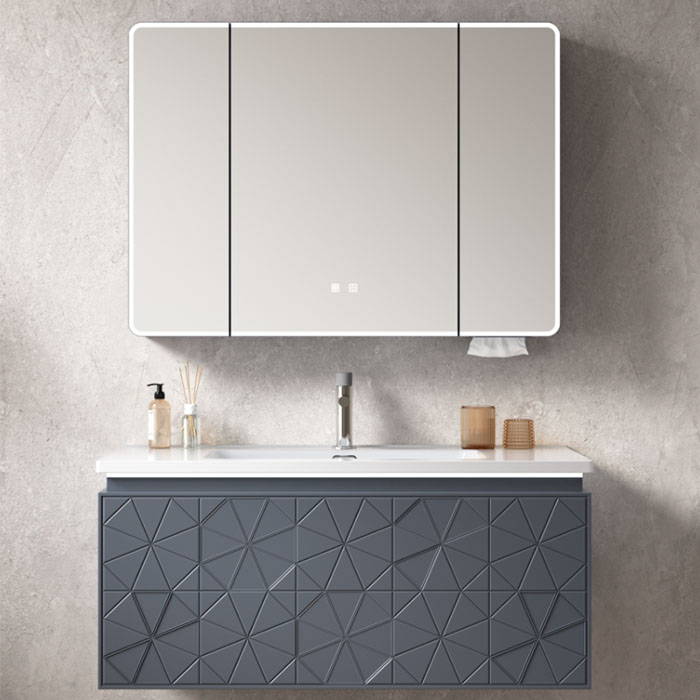
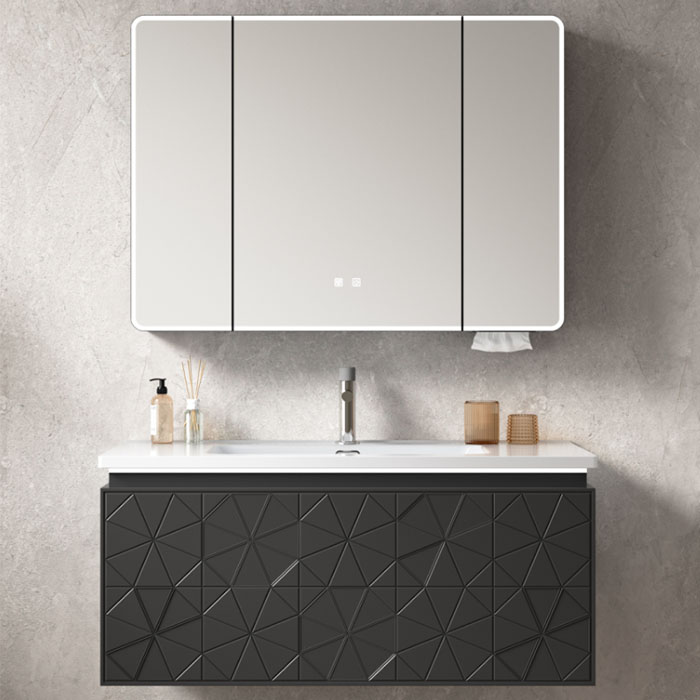
Floating(Wall-Mounted) bathroom cabinets: This lifts the cabinet off the ground, creating a classic example of vertical utilization. Its suspended nature offers three advantages:
- Visual Expansion: The negative space created by the cabinet base and the floor visually extends the bathroom area, a particularly significant effect in smaller apartments (less than 5 square meters). Users report a 25-30% increase in perceived spaciousness.
- Multifunctional Area: The raised space can be flexibly stored as a scale, foot basin, or laundry basket. Japanese homes even use it as a pet bathing area.
- Ergonomic Fit: The height can be freely adjusted from 75 to 91 cm, allowing users from 160 to 195 cm to find a comfortable position.
Floor-standing bathroom cabinet: Its advantage lies in its sheer volume.
- Maximum Volume: A cabinet of the same width can provide over 30% more storage space, making it ideal for storing bathroom supplies in large households.
- Integrated Storage Solution: Stepped storage compartments are often integrated into the sides, creating dedicated areas for cosmetics and hair dryers.
Moisture-proof performance comparison
Moisture is the ultimate threat to bathroom cabinets, and two designs offer significant differences:
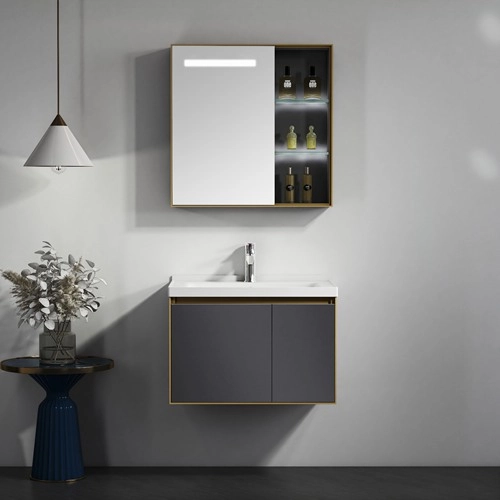
Floating cabinets employ an “isolation strategy”: A clear ground clearance (typically ≥30cm) creates an air convection layer, accelerating the evaporation of moisture from the ground.
A typical example: In bathrooms without dry and wet separation, the lifespan of a suspension-mounted cabinet is an average of 3-5 years longer than that of a floor-standing cabinet.
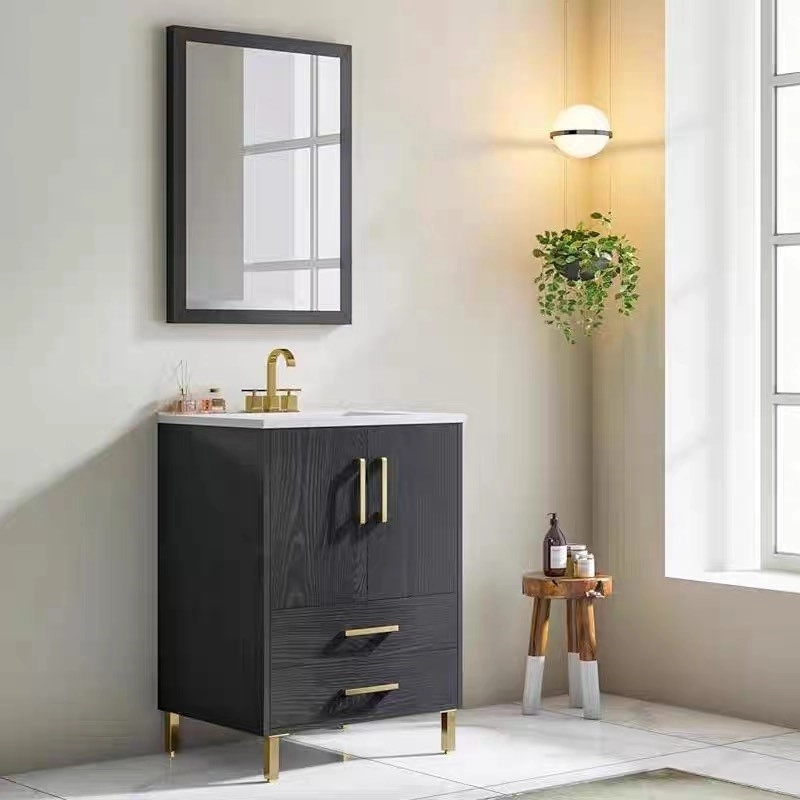
Floor-standing cabinets must address the challenge of “ground erosion”: even with rubber edge banding, capillary absorption of moisture at the ground surface is difficult to prevent.
Industry Solutions:
- Increase the cabinet legs to at least 15cm (traditionally only 5-8cm)
- Insert an aluminum alloy moisture-proof panel into the bottom
- Silicone moisture-proof mats are recommended.
| Test Conditions | Wall-mounted | Floor-standing |
| 70% humidity (12 months) | Board expansion ≤ 0.3% | Floor expansion 1.2-1.8% |
| Floor water test | No cabinet penetration | Wetness observed within 15cm of the bottom |
| Extreme humidity test | Passed 2000 hours | Passed 1200 hours |
Ease of cleaning
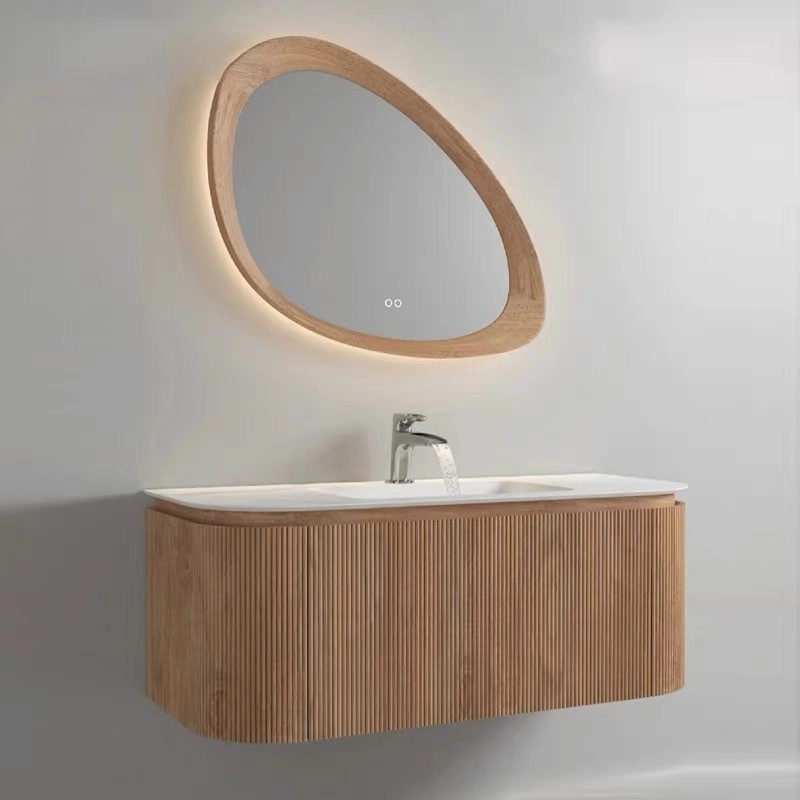
Floating(wall-mounted) bathroom vanity
Create a zero-dead-angle topology: The robot vacuum can roam freely, eliminating the stubborn problem of dust and mold accumulation under traditional cabinets. The countertop, cabinet, and floor form a continuous surface, allowing a single wipe.
Floor-standing bathroom vanity
Face a cleaning challenge: An 8-12cm high-risk contamination zone forms where the cabinet meets the floor, requiring the cabinet to be moved for thorough cleaning. According to a survey by the European Bathroom Association, 73% of users haven’t cleaned this area for more than six months.
Installation requirements: Hard constraints on walls, pipes, and renovations
Wall conditions determine the possibility
Floating(wall-mounted) hard thresholds:
- Must be a load-bearing wall or solid brick wall (tensile strength ≥ 30 MPa)
- Hollow brick walls require a pre-embedded steel structure transfer layer, increasing costs by 40%
- Strictly prohibited from installation on light steel stud partitions—there have been cases in Japan where cabinets have fallen due to illegal installation.
Common advantages of floor-standing thresholds:
- No wall requirements, even suitable for placement next to glass partitions
- Can be freely moved, making it suitable for rental properties
Pipeline adaptability
Drainage type determines aesthetics:
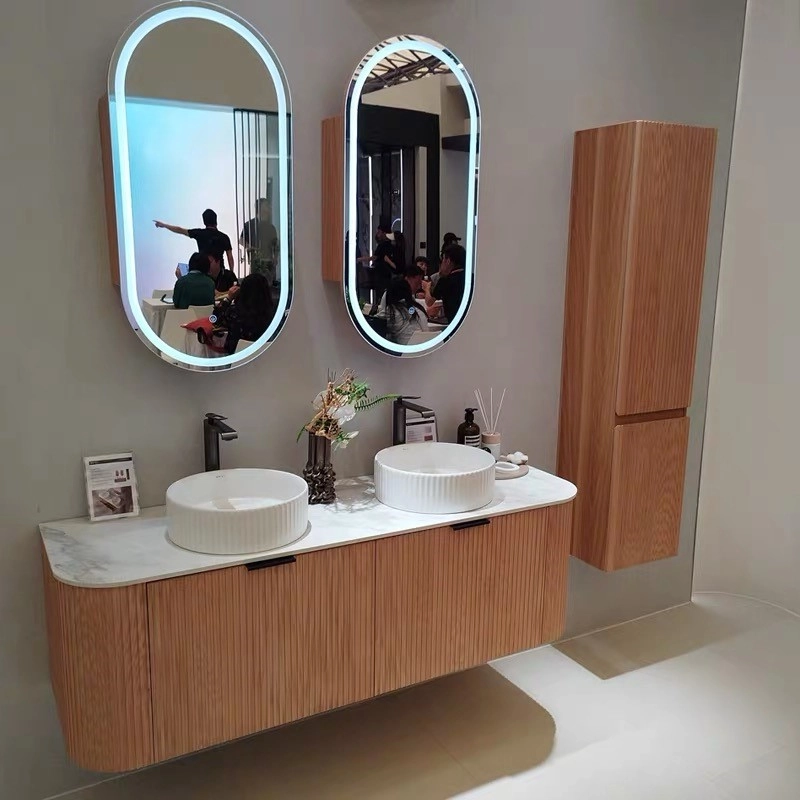
Wall drains are perfectly concealed within the suspended cabinet, creating a minimalist aesthetic. Floor drains should be floor-standing, as exposed pipes will otherwise detract from the aesthetic appeal of the space.
Accessibility:
Wall drains typically have access openings on the floor, requiring the clearing of the cabinet contents. Floor-standing drains, however, feature concealed access doors on the side panels for greater convenience.
Design Aesthetics Trends: From Instrumental Rationality to Emotional Resonance
Contemporary bathroom design is undergoing a transition from functionalism to emotional design, with two types of bathroom cabinets developing distinct aesthetic languages:
Suspension: A Manifesto of Modernism
Visual Features:
- Bottom light strip design (popular 4000K neutral light) creates a sense of suspended technology
- A slim cabinet (thickness ≤ 20cm) creates a light and airy appearance
Material Revolution:
- Thin ceramic panels (3-5mm), composite honeycomb aluminum panels
- Translucent artificial stone countertops
Representative Styles:
- Bauhaus minimalism
- Japanese Zen-inspired space
Floor-standing type: sublimation of traditional aesthetics
Styling Breakthroughs:
- Tapered legs emulating vintage furniture
- Rattan door panels and solid wood frames
High-End Evolution:
- Italian brand integrates a marble base with the cabinet body
- French-inspired carved paneling
Summary
As a spiritual refuge for modern people, the bathroom’s design transcends mere functional considerations. Whether choosing a floating, lightweight structure or a floor-standing, substantial one, the choice is ultimately an expression of the essence of life. At the intersection of technology and humanity, the evolution of bathroom cabinets continues to elucidate a profound dialogue between space and humanity. Shouya, a leading bathroom cabinets manufacturer, is committed to providing high-quality bathroom vanity solutions to you. Contact us now to get more information!