FR
FR  EN
EN  DE
DE  RU
RU  JA
JA  AR
AR  ES
ES A bathroom vanity may look attractive in a catalog but still create problems during installation, shipping, or long-term use. Incorrect dimensions, unsuitable materials, unclear specifications, and poor packaging can increase project costs and after-sales issues.
Shouya, a professional bathroom vanity manufacturer, focuses on bathroom vanity selection for the U.S. and Canadian markets, covering styles, sizes, materials, construction, packaging, and sourcing considerations. Whether you are developing a new product collection or selecting a reliable supplier, understanding these factors helps create bathroom vanity products that meet market expectations.
Choose the Right Bathroom Vanity Style for Your Market
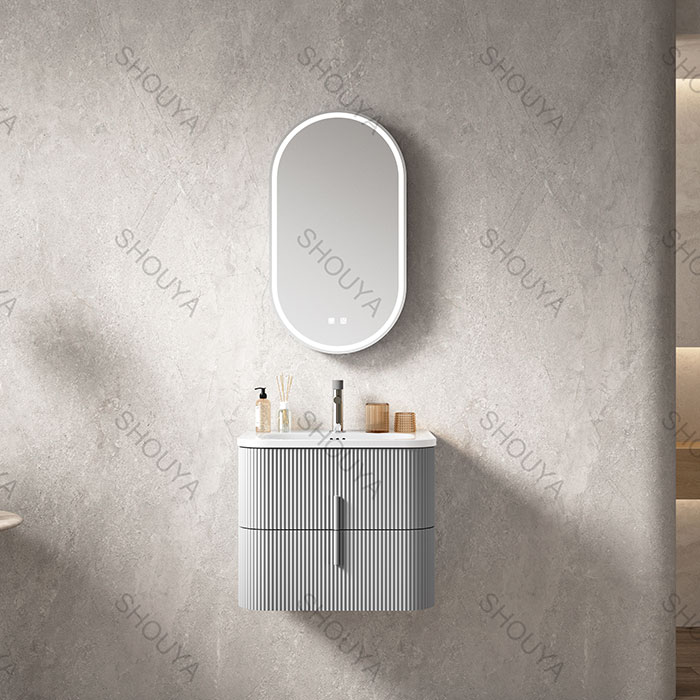
Bathroom vanity styles provide a starting point for product development, but successful collections should be based on target customers, sales channels, and market preferences rather than appearance alone.
A suburban renovation project, hotel development, and online retail collection may require different designs even when the price range is similar. For wholesalers and distributors, selecting versatile designs and coordinated finishes can help build a more competitive product range.
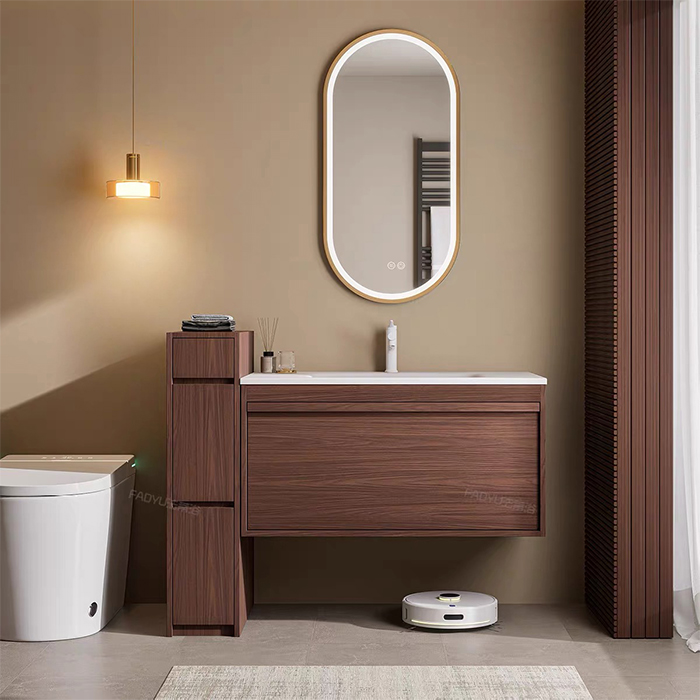
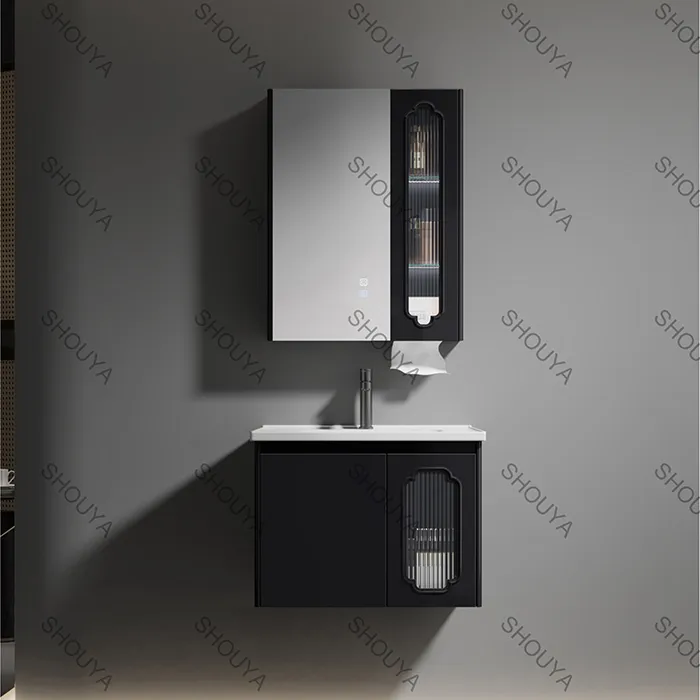
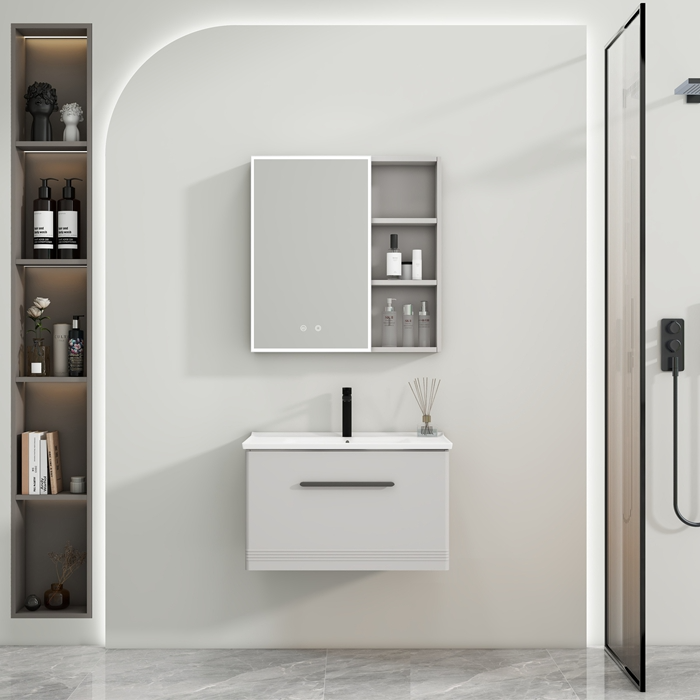
Farmhouse Bathroom Vanity: Warm Design with Practical Function
Farmhouse bathroom vanities typically feature framed doors, Shaker-style designs, furniture-inspired structures, and warm wood finishes. White cabinets, natural oak tones, and dark hardware are commonly used to create a comfortable and timeless appearance.
However, design details should not replace practical performance. Sink configuration, storage layout, cabinet proportions, and easy-to-clean surfaces are equally important for everyday use.
When reviewing samples, buyers should check the consistency of finishes, the alignment of doors and drawers, grain direction on wood-effect surfaces, and the quality of visible edges and connections.
Modern Bathroom Vanity: Clean Lines with Efficient Installation
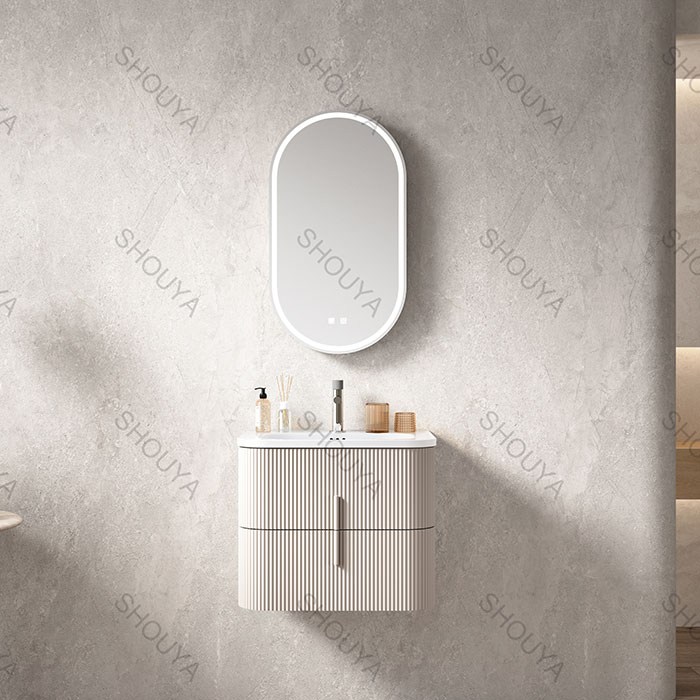
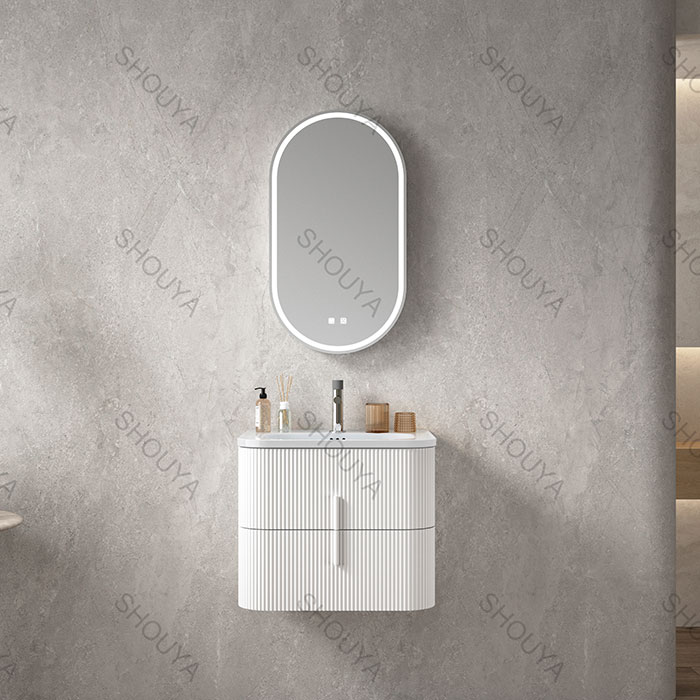
Modern bathroom vanities often feature floating designs, flat-panel doors, recessed handles, and simple finishes. Wall-mounted vanities can make smaller bathrooms appear more spacious while allowing easier cleaning underneath the cabinet.
However, floating bathroom vanities require suitable wall support. The installation system must consider the weight of the cabinet, countertop, sink, and stored items. Buyers should confirm fixing methods and structural requirements before selecting this type of product.
For sourcing projects, request detailed drawings rather than relying only on product images. The area under the sink, drawer structure, plumbing clearance, and internal storage design should all be evaluated before production.
Transitional Bathroom Vanity: A Flexible Choice for Different Markets
Transitional bathroom vanities combine traditional cabinet proportions with modern details. Their balanced appearance allows them to fit different interior styles, making them a practical option for retailers developing a wider product collection.
For buyers building a bathroom vanity range, one cabinet structure with multiple finishes may be easier to manage than several completely different designs. Popular combinations include white finishes with brushed metal hardware, wood-effect panels with matte black accessories, and neutral colors with modern handles.
The best-selling combination depends on the target market, customer preferences, and price positioning.
Industrial Bathroom Vanity: Focus on Visible Construction Details
Industrial bathroom vanities often use metal frames, open shelving, and darker wood tones. Because more structural elements remain visible, buyers should pay close attention to welding quality, coating coverage, connection points, and overall stability.
Open storage can create an attractive display appearance, but it may not suit every application. For hotels, rental properties, and commercial projects, storage requirements and maintenance routines should be considered carefully.
Understand Bathroom Vanity Sizes and Dimensions
Bathroom vanity sizes in the U.S. and Canada are commonly measured in inches. Standard widths are often used as a reference when selecting products, but buyers should always confirm the actual cabinet dimensions, countertop size, and installation requirements.
| Nominal Width | Metric Equivalent | Typical Application |
|---|---|---|
| 24 in. | 610 mm | Compact bathrooms and single-sink applications |
| 30 in. | 762 mm | Small full bathrooms with limited space |
| 36 in. | 914 mm | Single sink with additional storage |
| 48 in. | 1,219 mm | Larger single-sink bathroom layouts |
| 60 in. | 1,524 mm | Configurations à un ou deux éviers |
| 72 in. | 1,829 mm | Larger bathrooms, commonly used for double sinks |
Nominal size does not always represent the complete installed footprint. Buyers should check countertop overhangs, backsplash dimensions, side panels, fillers, door clearance, and plumbing space before confirming an order.
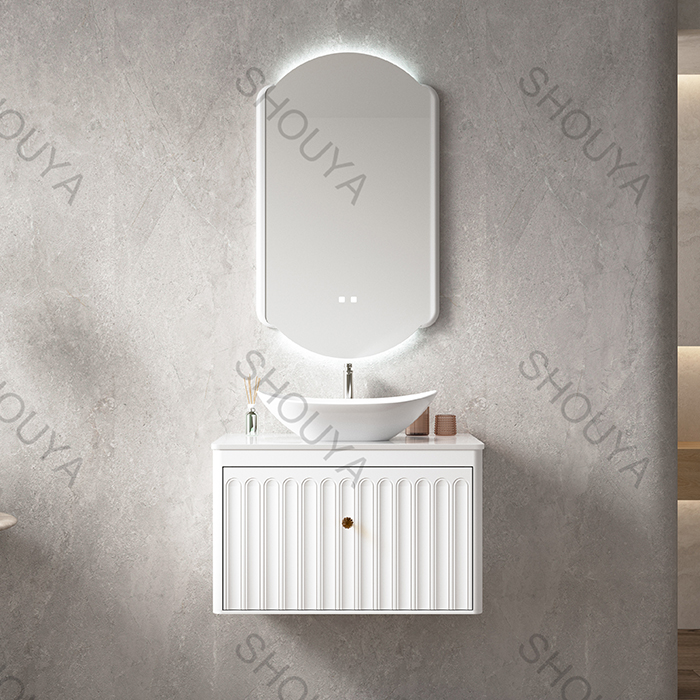
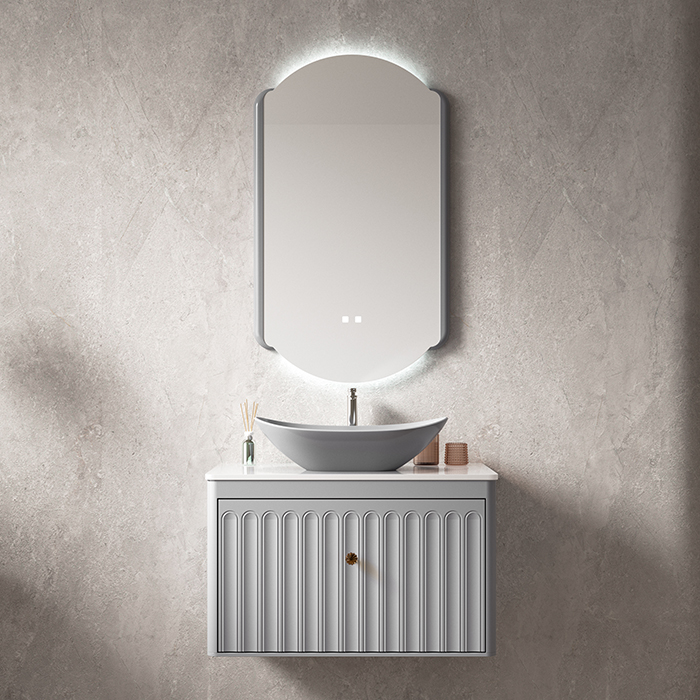
For vessel sinks or customized countertop designs, the combined height of the cabinet, countertop, and sink should also be considered to ensure comfortable daily use.
For renovation projects, it is important to review existing water supply lines, drainage positions, bathroom door width, stairs, and delivery routes. A bathroom vanity that fits the room may still create challenges during transportation and installation.
Compare Bathroom Vanity Materials and Cabinet Construction
Material selection plays an important role in bathroom vanity performance, appearance, pricing, and market positioning. For importers and distributors, choosing the right cabinet construction requires looking beyond material names and evaluating the complete structure, finish quality, hardware, and intended application.
Terms such as “water-resistant” and “waterproof” should not be treated as identical. A bathroom vanity is a complete system made of panels, joints, coatings, hardware, and installation components. Even moisture-resistant materials can be damaged by improper installation or long-term exposure to leaking water.
Vanité de salle de bain en contreplaqué
Contreplaqué is widely used in bathroom vanity construction because of its structural strength and stability. However, the final performance depends on the plywood grade, thickness, adhesive system, edge treatment, and manufacturing process.
When evaluating plywood bathroom vanities, buyers should confirm the construction of each component, including cabinet sides, bottom panels, back panels, and drawer boxes. A plywood cabinet may still include different materials for decorative fronts or internal components.
For wholesale and OEM projects, clear material specifications help buyers compare suppliers accurately and avoid misunderstandings during production.

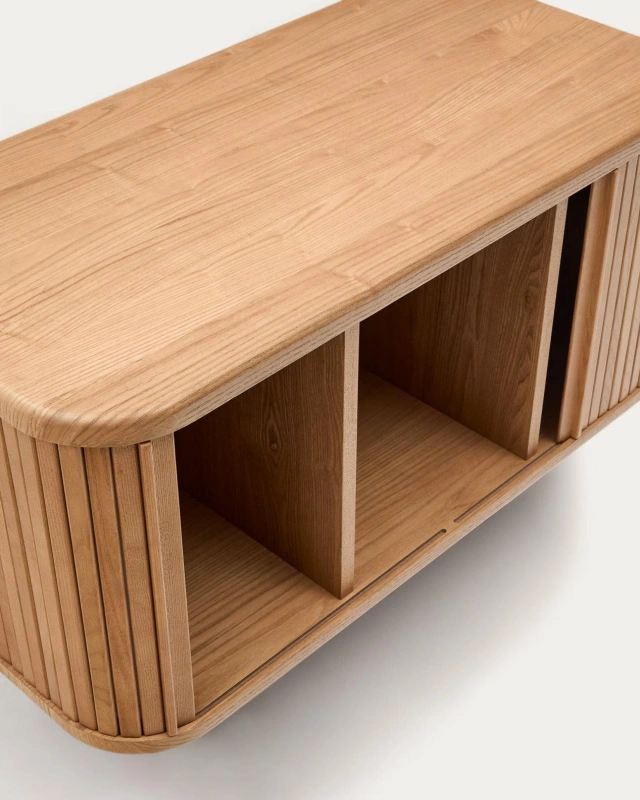
MDF and Particleboard Bathroom Vanity
MDF provides a smooth surface that works well for painted finishes and shaped cabinet doors. Particleboard-based panels are often used in cost-effective bathroom vanity collections with laminate or decorative surface finishes.
Neither MDF nor particleboard should be judged only by the material name. Buyers should review edge sealing, exposed cut protection, joint structure, hardware fixing points, and the areas around sinks and plumbing openings.
A wood veneer or wood-grain laminate describes the surface finish rather than the internal structure. A professional quotation should clearly separate the cabinet core material from the decorative finish so buyers can compare products more effectively.
PVC, Aluminum and Stainless Steel Bathroom Vanity
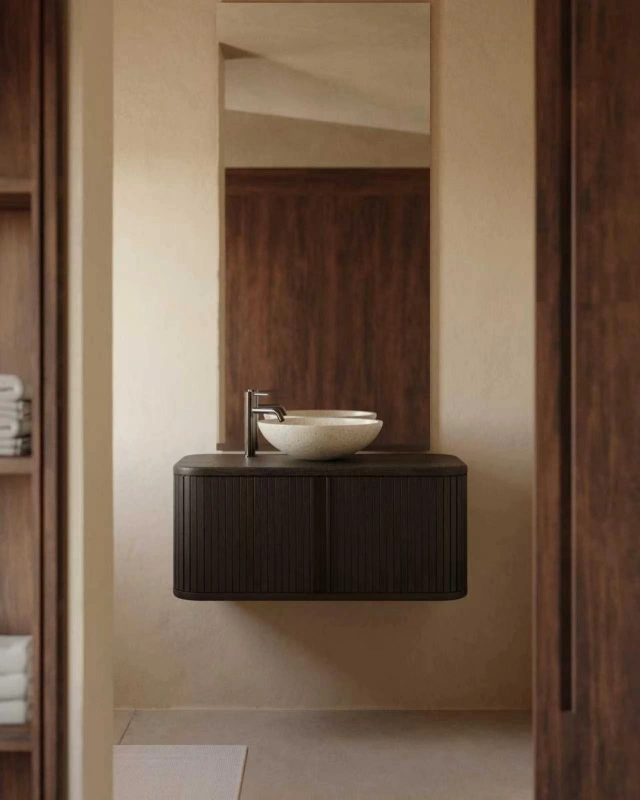
PVC, aluminiumet vanités de salle de bain en acier inoxydable are popular options for moisture-prone environments. These materials can provide different advantages in durability, appearance, maintenance, and market positioning.
However, material selection alone does not determine product quality. Buyers should evaluate structural strength, connection methods, surface treatment, and overall appearance.
For example, metal bathroom vanities require attention to welding points, coating consistency, and surface finishing. PVC bathroom vanities need appropriate reinforcement and reliable hardware attachment to ensure long-term performance.
SHOUYA bathroom vanity manufacturer provides bathroom cabinet solutions with different material options, including PVC, plywood, aluminum, and stainless steel constructions. The suitable specification depends on the target market, selling price, installation environment, and customer requirements.
Match Countertop, Sink and Vanity as a Complete System
A bathroom vanity should be evaluated as a complete installation system rather than individual components. The cabinet, countertop, sink, faucet, and drainage system need to work together to ensure proper installation and user experience.
Before confirming an order, buyers should check:
- Sink opening size and position
- Countertop thickness and material
- Faucet hole configuration
- Drain connection and plumbing clearance
- Included accessories and installation hardware
The word “set” does not always include the same components from every supplier. Buyers should confirm whether the quotation includes the countertop, sink, mirror, faucet, drain assembly, backsplash, or other accessories.
Ceramic integrated countertops provide a continuous basin and countertop surface, while undermount sinks create a different visual style with separate countertop materials. Quartz, solid surface, stone, and sintered materials also have different fabrication and maintenance requirements.
For double-sink bathroom vanities, buyers should consider both the overall width and the practical usability of the countertop area. Two sinks do not automatically create a comfortable working space if the layout does not provide sufficient storage and movement space.
For single-sink designs, an offset basin can create more usable countertop space, but the plumbing layout and drawer structure must be designed accordingly.
Important Features for Bathroom Vanity Buyers
Modern bathroom vanities often include additional features such as LED mirrors, mirror cabinets, smart storage solutions, and integrated power functions. However, buyers should evaluate whether these features provide practical value for their target customers.
LED Mirrors and Mirror Cabinets
LED mirrors and mirror cabinets can create a coordinated bathroom collection while improving lighting and storage functionality.
When selecting LED mirrors, buyers should review:
- Light output and color temperature
- Control method
- Mirror heating function
- Electrical requirements
- Maintenance and replacement access
For defogging mirrors, buyers should confirm the heated area and expected performance. A small heating section may only clear part of the mirror surface.
A complete bathroom collection often combines vanities with matching mirrors and accessories. Miroir de salle de bains à LED can help distributors create a more coordinated product range.
Storage and Hardware Quality
Practical storage design often has a greater impact on daily use than additional decorative functions. Drawer layout, internal organization, plumbing space, and hardware durability should all be considered.
Buyers should check:
- Drawer opening and closing performance
- Soft-close hinge and runner quality
- Drawer alignment
- Replacement part availability
- Internal storage efficiency
Soft-close is a useful function, but it does not automatically represent long-term durability. Hardware quality, installation precision, and after-sales support are equally important.
Integrated Power Features
Bathroom vanities with electrical functions, charging ports, or powered mirrors require additional attention. Buyers should confirm electrical documentation, product specifications, and local installation requirements before developing these products for a specific market.
A component certificate does not automatically cover the complete finished product. Electrical features should always be evaluated based on the exact model and destination market.
Packaging and OEM Considerations for Bathroom Vanity Importers
For international buyers, packaging is an important part of product quality. A bathroom vanity delivered to a warehouse, retail store, or project site may experience multiple handling processes during transportation. Packaging should be designed according to the product structure, shipping method, and final delivery environment.
A fournisseur fiable de meubles de salle de bains should consider:
- Cabinet structure and product weight
- Protection of ceramic sinks and countertops
- Mirror safety during transportation
- Carton strength and internal protection materials
- Clear product identification and installation instructions
Fully assembled bathroom vanities can reduce installation work for end customers but usually require more shipping space. Ready-to-assemble (RTA) designs can improve container efficiency, but they require stronger connection design, accurate hardware packages, and clear installation instructions.
For importers and distributors, the most important factor is not only factory price or shipping volume, but the complete delivered cost, including transportation, installation time, potential damage, and after-sales service.
Before confirming production, buyers should discuss:
- Whether countertops, ceramic basins, and mirrors are packed separately
- How fragile components are protected
- Whether packaging has been tested for the intended transportation method
- How replacement parts are identified and supplied
A packaging photo alone does not prove transportation reliability. Professional suppliers should provide clear packaging specifications and improve protection based on actual shipping experience.
How to Choose a Reliable Bathroom Vanity Manufacturer
Choosing the right bathroom vanity manufacturer is an important step for importers, wholesalers, and retailers developing long-term product collections. A suitable supplier should provide not only competitive products but also stable production capability, quality control, customization support, and reliable communication.
Evaluate Factory Capability
A professional bathroom vanity factory should have experience in cabinet production, surface finishing, assembly processes, quality inspection, and export packaging.
Before cooperation, buyers should understand:
- Factory production capability and product categories
- Material options and customization ability
- Quality inspection process
- Sample development process
- Production lead time and order management
Consider OEM and ODM Support
Different markets often require different sizes, finishes, configurations, and packaging solutions. OEM and ODM capabilities allow buyers to develop bathroom vanity products based on their own market positioning.
A reliable supplier should be able to support:
- Customized cabinet sizes and structures
- Different material selections
- Color and finish development
- Private label requirements
- Solutions d'emballage sur mesure
For distributors and retailers, working with an experienced OEM bathroom vanity supplier can help create differentiated product collections instead of competing only on standard models.
Confirm Quality Control and Product Consistency
For repeat orders, consistency is as important as the first sample. Buyers should review how suppliers control:
- Material inspection
- Surface finish quality
- Cabinet assembly accuracy
- Hardware installation
- Final product inspection
Clear product specifications, approved samples, and inspection standards help reduce misunderstandings during mass production.
SHOUYA bathroom vanity supplier supports OEM and ODM projects for distributors, retailers, and project buyers, offering bathroom vanity solutions with different materials, finishes, sizes, and packaging requirements.
Build a Bathroom Vanity Collection for Your Target Market
A successful bathroom vanity collection should be developed according to the target sales channel, customer expectations, and market requirements.
Different buyers focus on different priorities:
- Retail buyers: Need clear product information, attractive designs, accurate dimensions, and reliable packaging.
- E-commerce sellers: Need detailed product images, finish descriptions, package information, and efficient after-sales handling.
- Project buyers: Often focus on specifications, drawings, delivery schedules, and long-term supply stability.
- Distributors: Need a balanced product range with suitable price positioning and repeat order potential.
For a new product line, it is usually more practical to begin with a focused selection of popular sizes and designs before expanding into more complex configurations.
The right product range depends on your target customers, warehouse capacity, market demand, and pricing strategy. There is no single bathroom vanity collection that works equally well for every market.
Bathroom Vanity Buyer Checklist
| Catégorie | What to Confirm |
|---|---|
| Dimensions | Cabinet size, countertop size, installation space, and delivery route |
| Plumbing | Sink position, faucet holes, drain clearance, and drawer structure |
| Construction | Material specification, finish quality, hardware, and assembly details |
| Product Scope | Included components such as countertop, sink, mirror, and accessories |
| Documentation | Market-specific requirements and product information |
| Emballage | Transportation method, protection design, and replacement process |
| After-sales | Spare parts availability and claim handling procedure |

Frequently Asked Questions About Bathroom Vanities
What are common bathroom vanity sizes in North America?
Common bathroom vanity widths include 24, 30, 36, 48, and 60 inches. Larger sizes such as 72 inches are also available for bigger bathrooms and double-sink layouts. Buyers should always confirm actual cabinet and countertop dimensions instead of relying only on nominal sizes.
Is a floating bathroom vanity better than a freestanding vanity?
Neither option is always better. Floating vanities create a modern appearance and make cleaning underneath easier, but they require suitable wall support. Freestanding vanities offer flexible installation options and remain popular for many traditional and renovation projects.
Can MDF bathroom vanities be used in the U.S. and Canada market?
MDF bathroom vanities can be suitable for these markets when the product construction, finish protection, and applicable requirements are properly considered. Buyers should evaluate the complete cabinet structure rather than the material name alone.
Do all bathroom vanities need electrical certification?
Non-electrical bathroom cabinets are different from products with powered mirrors or electrical functions. For bathroom vanities with electrical components, buyers should confirm the applicable requirements based on the product design and destination market.
Is ready-to-assemble packaging always cheaper?
Not necessarily. RTA packaging may reduce shipping volume, but buyers should also consider assembly requirements, hardware management, installation time, and possible after-sales costs.
From Design to Delivery: Building a Reliable Bathroom Vanity Collection
A successful bathroom vanity product is about more than appearance. The strongest specifications connect visible design with practical details, including cabinet construction, installation requirements, packaging protection, and long-term serviceability.
Fondée en 2004, Chaozhou Shouya Sanitary Ware Co., Ltd. (SHOUYA) manufactures bathroom vanities and provides coordinated bathroom solutions, including ceramic basins, LED mirrors, and mirror cabinets.
With experience in OEM and ODM projects, SHOUYA works with distributors, retailers, and project buyers to develop bathroom vanity collections based on different market requirements, including sizes, materials, finishes, packaging, and product specifications.
Planning a bathroom vanity collection for the U.S. or Canadian market? Contacter Shouya to share your target sizes, preferred materials, sales channel, and customization requirements with SHOUYA to start a product discussion.