FR
 EN
 DE
 RU
 JA
 AR
 ES
A bathroom vanity quote comparison starts with checking what each price includes. Cabinets that look similar can be quoted at different prices because the board, hardware, finish, basin and countertop, or export packaging may differ. Ask both suppliers to quote against the same specifications and trade terms so you can compare their offers item by item.
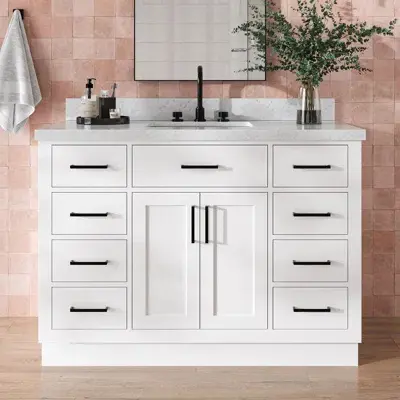
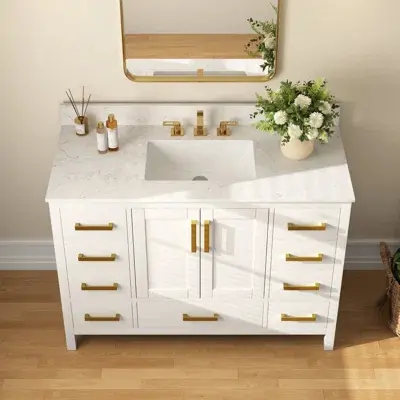
One buyer sent Shouya a photo of a 36-inch white freestanding vanity with Shaker-style doors. Another fournisseur de meubles de salle de bain quoted $78 FOB, while Shouya quoted $115. The two quotes covered different specifications. This case shows which details to check before deciding whether a $37 difference is worth paying for.
Start with the Bathroom Vanity Cost Breakdown
For a mid-range, 36-inch plywood vanity sold on an ex-works basis, the cost is commonly distributed roughly as follows. Exact figures vary with the design, order quantity, and chosen materials, but this breakdown gives buyers a useful starting point.
| Cost component | Share of ex-works cost |
| Cabinet board and carcass | 38% |
| Basin and countertop | 20% |
| Matériel | 12% |
| Surface finish | 10% |
| Labour and factory overhead | 8% |
| Export packing | 7% |
| Factory margin | 5% |
The important point is the relative weight of each item. The cabinet structure alone accounts for a much larger share than the factory’s margin. That gives a supplier several ways to reduce the quoted price without changing the appearance of the finished vanity. A lower price is not automatically a warning sign, but it is a reason to check whether both suppliers are pricing the same specification.
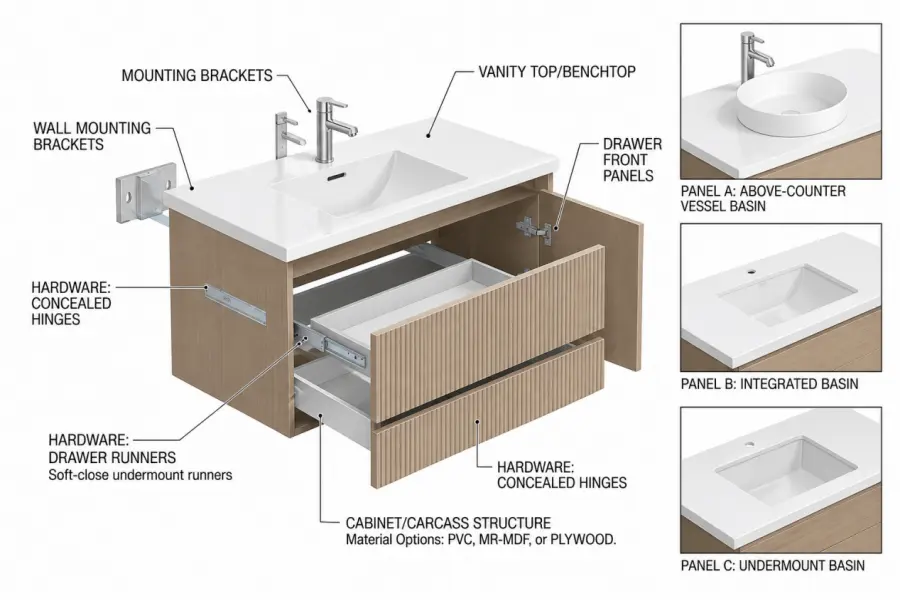
Cabinet Construction and Panel Specifications
Panel thickness is another detail worth checking. For example, reducing panel thickness from 18 mm to 15 mm, or replacing a 5 mm plywood back panel with 3 mm hardboard, may not create an obvious difference in catalog photos. However, these changes can affect cabinet rigidity and structural support during installation and use.
In this cost example, replacing plywood with MDF and reducing the back panel thickness is estimated to lower panel material costs by about 15%–20%. Cabinet panels and construction account for about 38% of the illustrative ex-factory cost, so this adjustment is about 6%–8% of the total ex-factory cost. When evaluating a bathroom vanity manufacturer, buyers should consider whether such material substitutions affect the product’s overall durability and structural performance, rather than comparing quotations based on price alone.
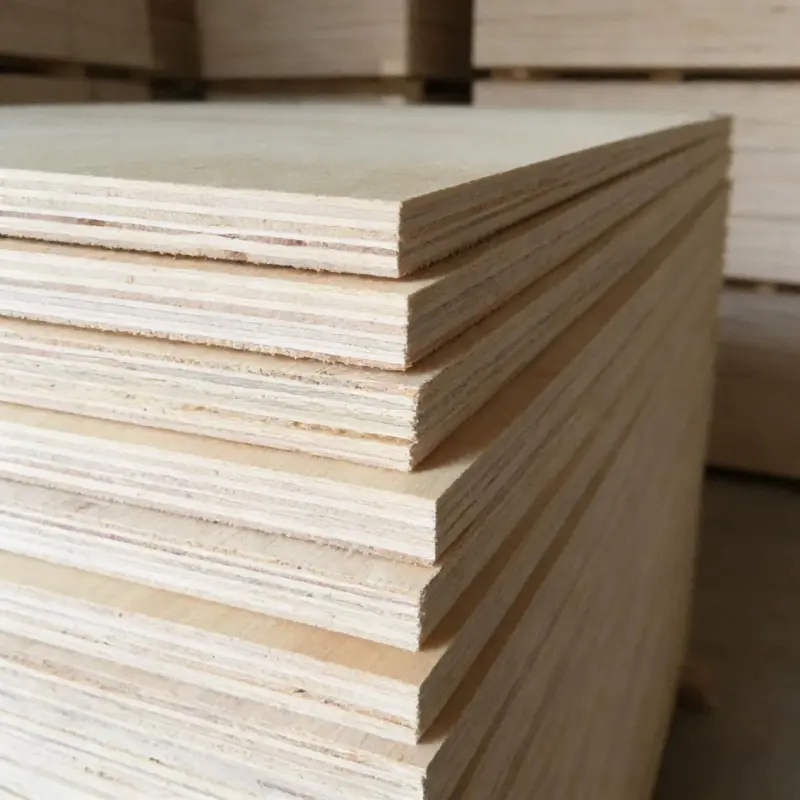
Thickness is another detail worth checking. Reducing a side panel from 18 mm to 15 mm, or replacing a 5 mm plywood with a 3 mm hardboard panel, may not change the product’s appearance in a catalogue photo. It can, however, affect rigidity and how well the cabinet holds its shape once loaded and installed.
A change from plywood to MDF, combined with a thinner back panel, can reduce the board cost by an estimated 15–20%. Since the board and carcass make up about 38% of the overall ex-works cost in this example, that change alone may explain roughly six to eight percentage points of the price difference.
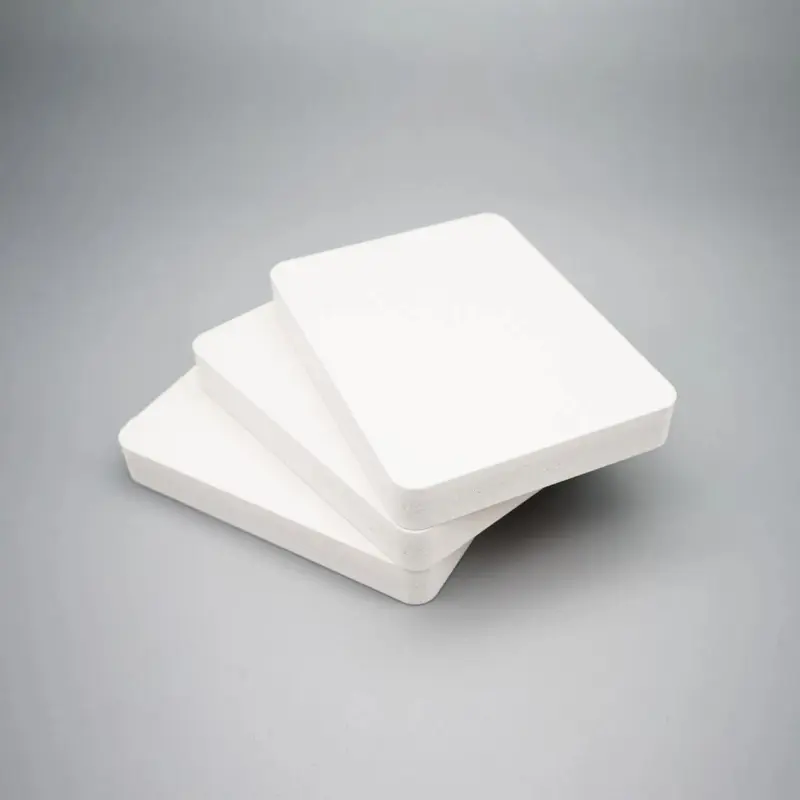
Edge banding deserves attention too. A thin PVC strip applied by hand is not equivalent to 2 mm banding applied and trimmed by machine. Ask the supplier to state the panel material and thickness, back-panel material and thickness, edge-banding thickness, and the formaldehyde-emission requirement for your destination market. Depending on the market, this may include E1, E0, CARB P2, or TSCA Title VI.
Compare Hinges and Drawer Runners by Model
Hardware accounts for about 12% of the illustrative cost. A branded soft-close hinge can cost several times as much as a generic alternative. Across several doors and drawers, those differences can noticeably affect wholesale bathroom vanity quotes.
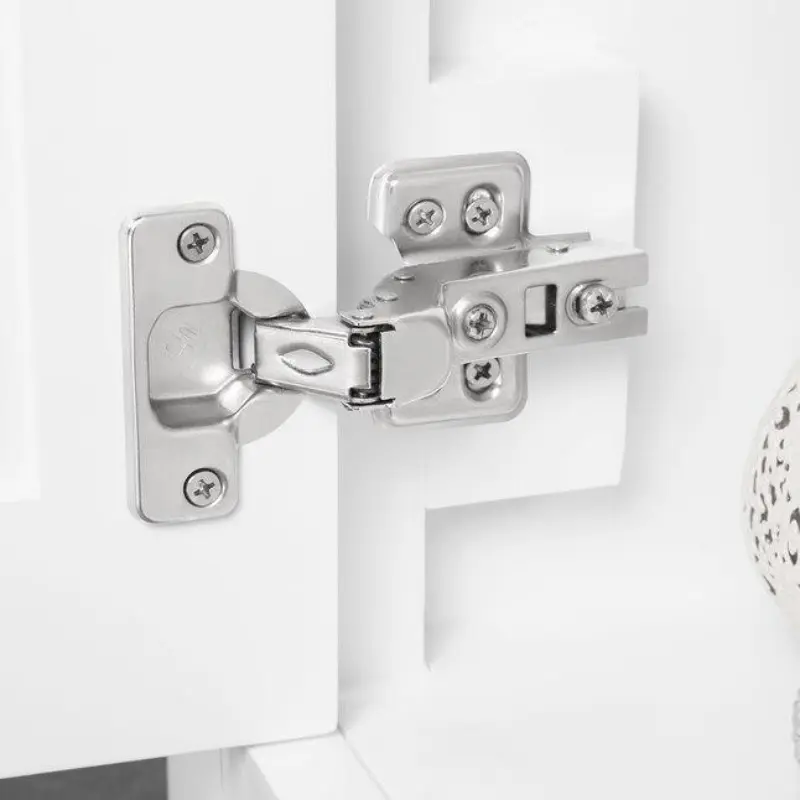
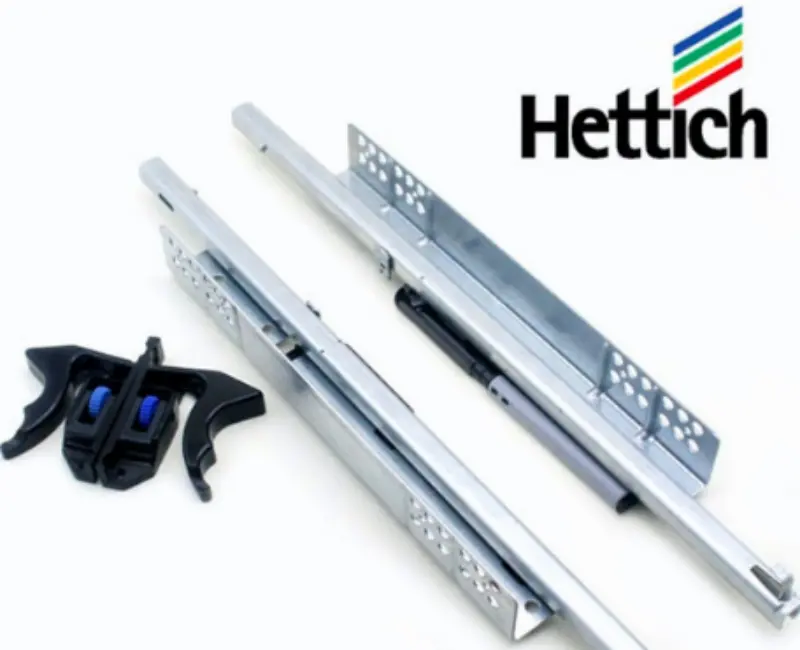
Two hinges may feel similar during a brief showroom test. After repeated use, one may lose its soft-close action or allow the door to fall out of alignment. Ask your fournisseur de meubles de salle de bain for the hinge and runner brand, model, and documented cycle-test rating. Confirm whether the drawer uses ball-bearing or roller runners, and request a spare-parts list if you plan to support the range for several years.
Verify the Surface Finish, Basin, and Countertop
Surface finish. White doors can use UV-cured coatings, water-based paint, or melamine-faced finishes. These processes differ in cost and in how the surface and edges respond to scratches, cleaning, and moisture. Ask the fabricant de meubles de salle de bains to name the finish process, confirm the number of coats where relevant, and share available test results. A damp-sponge check on a hidden edge can serve as an initial screen. Use controlled test results when comparing performance.
Basin and countertop. “Ceramic basin” can cover products that differ in body material, weight, and glaze coverage. Compare weight only between basins of similar dimensions. For engineered stone, ask for the material specification and any available stain-resistance data. Also check whether the quoted top is a one-piece moulded unit or a separate basin joined to the countertop. A joined design adds a seam that needs proper sealing.
Include Export Packaging and Services in the Comparison
Packaging accounts for about 7% of the illustrative cost, but it protects the full value of the order. Depending on the model and shipping route, bathroom vanity export packaging may include reinforced cartons, foam corner blocks, edge protection, and internal supports to hold the top away from the carton walls. A lighter packing configuration may reduce the quoted price while increasing the risk of damaged corners, scratched panels, or cracked basins in transit.
Carton dimensions also affect freight. An extra 50 mm in carton height may reduce the number of units that fit in a 40-foot high-cube container. Ask the usine de meubles de salle de bain for the packing drawing, gross weight, and cubic metres per set, plus any available drop-test report.
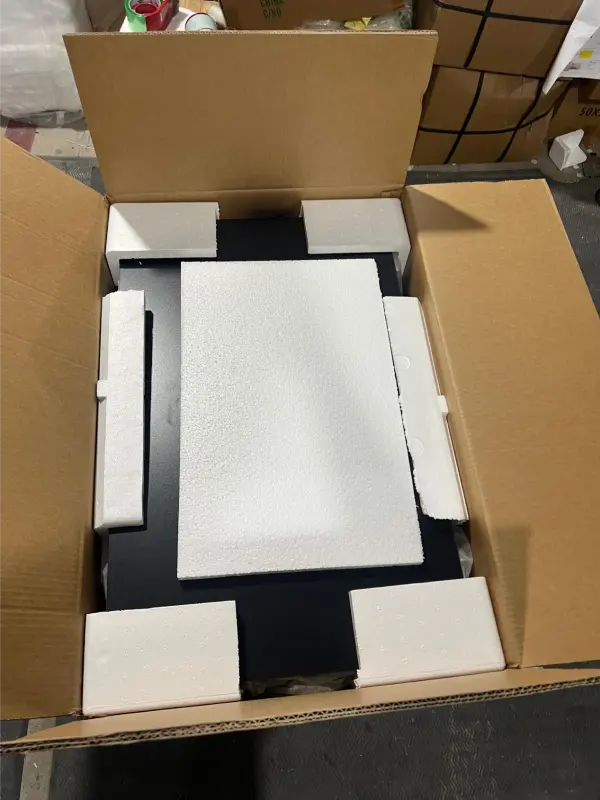
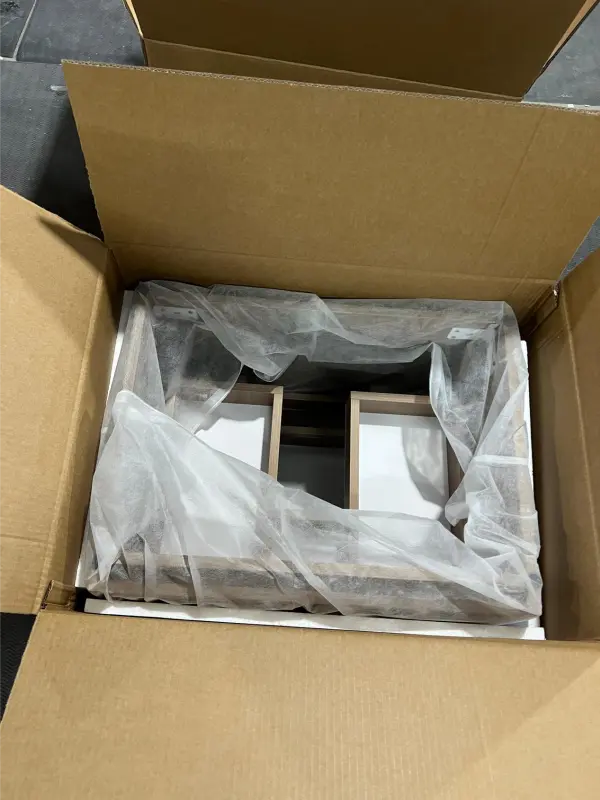
Some costs sit outside the visible product specification. Confirm whether the offer includes pre-shipment inspection, applicable documents for your destination market, drawing review, tooling or engineering work, and after-sales support. Even if two suppliers quote the same cabinet configuration, their prices may cover different levels of service.
Costs that may not appear in the unit-price breakdown
Some expenses are easy to overlook because they are not always shown as separate lines on a quotation. Final inspection is one example. Checking the basin, door alignment, and visible surfaces before packing takes time, but it can catch issues before the goods leave the factory. Without that check, a defect may only be discovered after the shipment arrives.
Compliance is another cost that depends on the destination market and product configuration. Examples relevant to bathroom vanities and their materials include cUPC for certain North American plumbing products, WaterMark for applicable products in Australia, CE or UKCA where relevant to products sold in Europe or the UK, and CARB P2 or TSCA Title VI requirements for composite wood products entering the United States. The exact requirement should be confirmed for the product and market; not every vanity or component requires every listing.
Custom designs also involve work beyond the production line. Drawings may need to be reviewed and converted into manufacturing specifications, and some projects require tooling or engineering input. After-sales support has a cost too: keeping hinges, handles, and touch-up materials available after an order has shipped requires planning and inventory.
This is why a factory’s margin should not be treated as the only place a discount can come from. In the example above, the margin is around 5%. A substantial price reduction is therefore more likely to involve changes to materials, hardware, finishing, packing, or service than a simple reduction in profit.
Bathroom Vanity Quote Comparison Checklist for Importers
Send both bathroom vanity suppliers the same request for quotation. Ask them to fill in the details below so you can compare the offers line by line.
| Information to request | Why it matters |
| Bill of materials: board type and thickness, back panel, edge banding | The largest cost component in this example |
| Hinge and runner brand, model, and cycle rating | Helps assess durability beyond the initial inspection |
| Finish process and coating details | Similar appearance can hide different surface systems |
| Basin material and weight; one-piece or seamed top | Clarifies the construction behind a broad product description |
| Packing drawing, gross weight and CBM per set | Helps assess protection and estimate freight efficiency |
| Applicable listings, compliance documents and after-sales terms | Confirms market suitability and the support included |
Both quotes in the opening example can be valid for their respective specifications. If the lower-priced option meets your market’s requirements, it may be the better buy. If the higher price includes a stronger cabinet structure, different hardware, or more protective packaging, you can decide whether those differences justify the extra cost for your order.
Why Choose Shouya for Your Wholesale Bathroom Vanity Order?
A bathroom vanity quote comparison should help you understand what you are paying for and what will be delivered. As a bathroom vanity manufacturer, Shouya combines customization, production, and wholesale supply to help buyers turn a reference photo into a clearly specified order.
- Direct factory communication: Discuss cabinet materials, dimensions, hardware, and basin or mirror configurations directly with Shouya. This helps clarify the differences between quotations and whether the additional cost provides features your customers need.
- Configuration options around your budget: With semi-custom and OEM/ODM bathroom vanity services, Shouya can discuss adjustments to existing designs, sizes, colors and accessories. Buyers can explore suitable configurations based on their target price and sales requirements.
- Sample approval and production checks: Shouya’s process includes design or sample approval before production, alongside inspections covering materials, production, assembly, and delivery. Agreed specifications provide a clearer reference for checking wholesale bathroom vanity cabinets.
- Packaging and matching product support: Cabinet, basin, mirror, and accessory options, together with assembly, labeling, and packaging services, help buyers discuss the complete supply scope before ordering and prepare goods for receiving and resale.
Whether you are comparing a $78 quotation with a $115 quotation or planning a new range, Shouya can help you discuss the specifications behind the price.


Conclusion: Request an Itemised Quote from Shouya
For your bathroom vanity quote comparison, send SHOUYA your reference photo, specifications, or current quote. As a bathroom vanity manufacturer in China, we can review the cabinet, hardware, basin, and packaging requirements and explain what our factory quote includes. Contacter Shouya for an itemised wholesale quote you can compare against the same specifications.