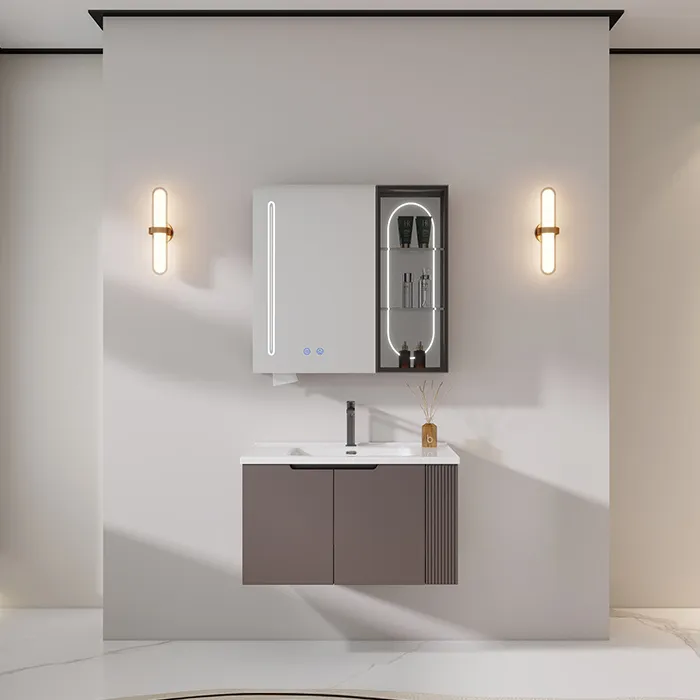
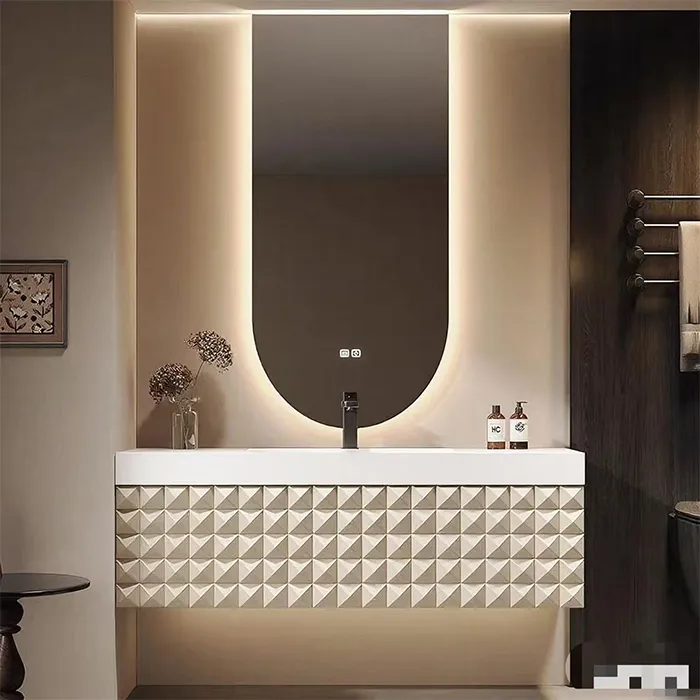
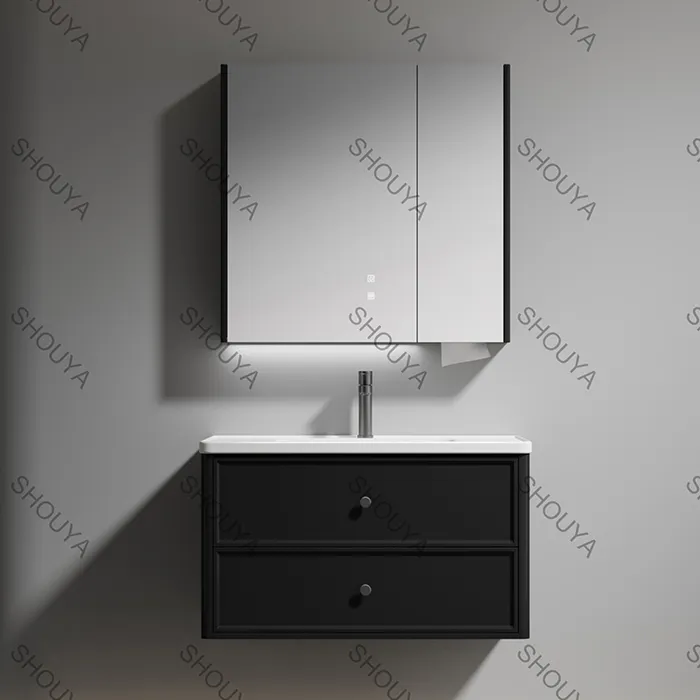
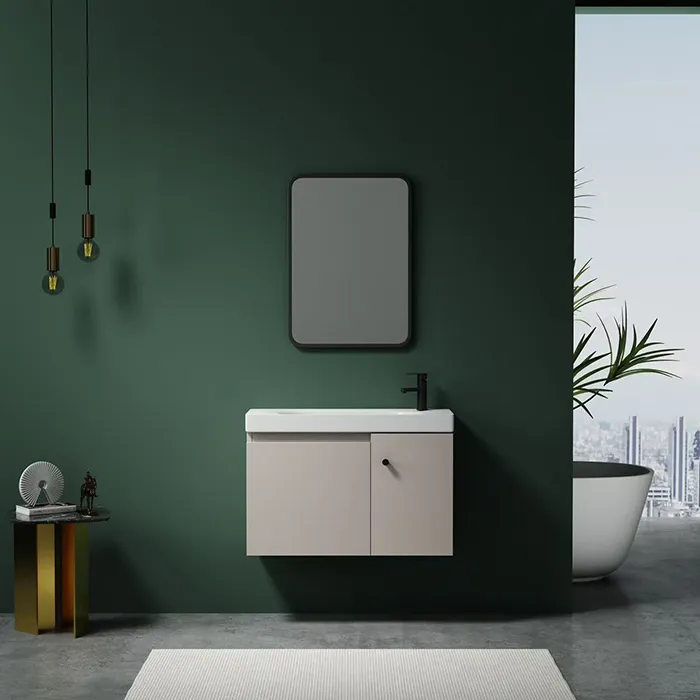
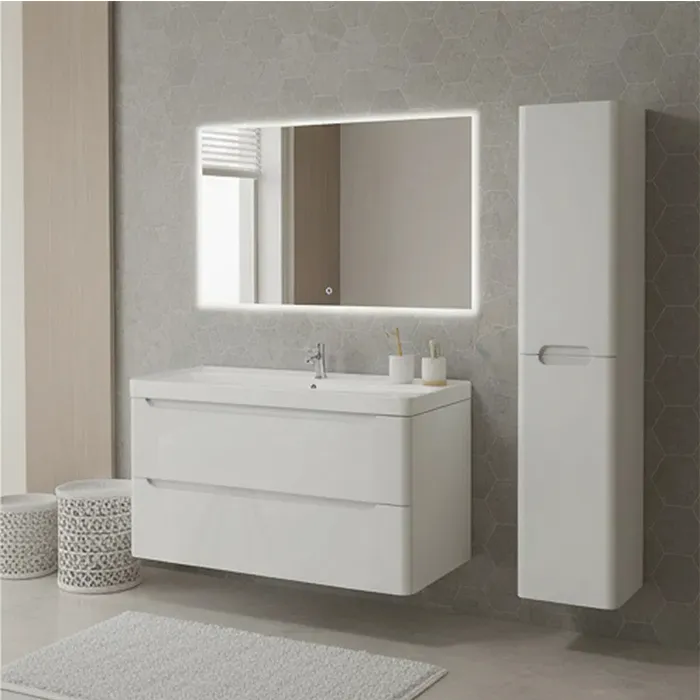
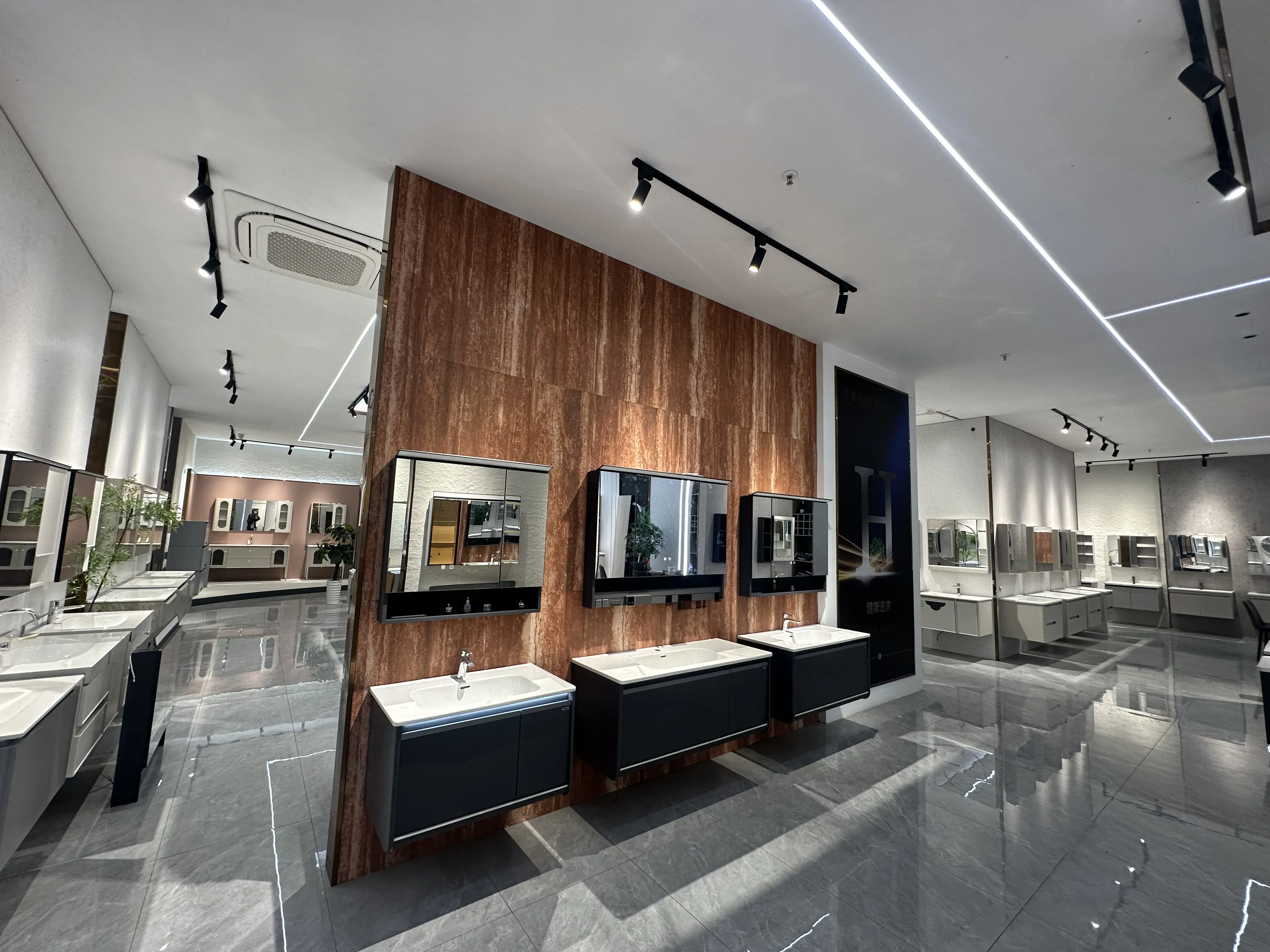
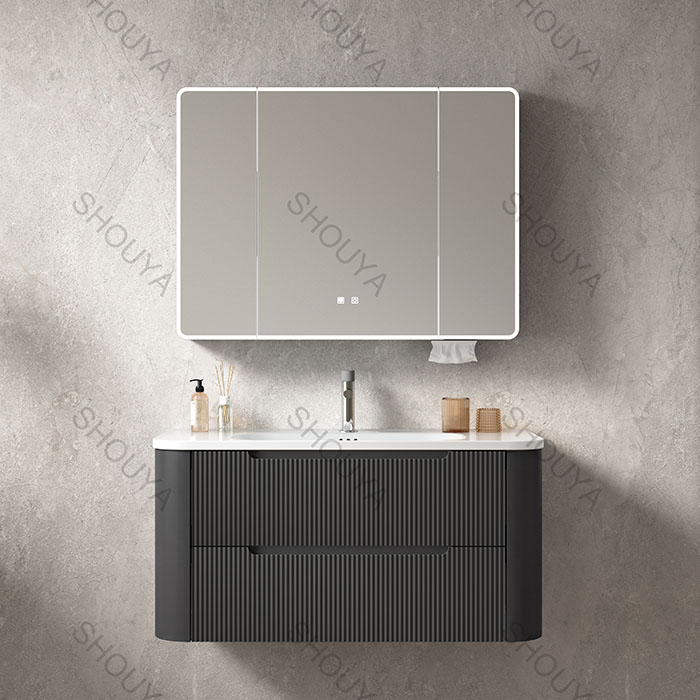
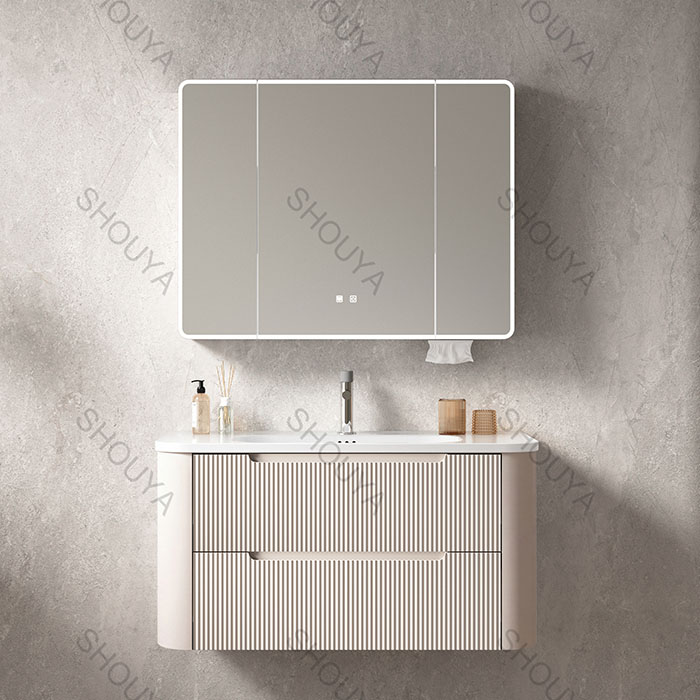
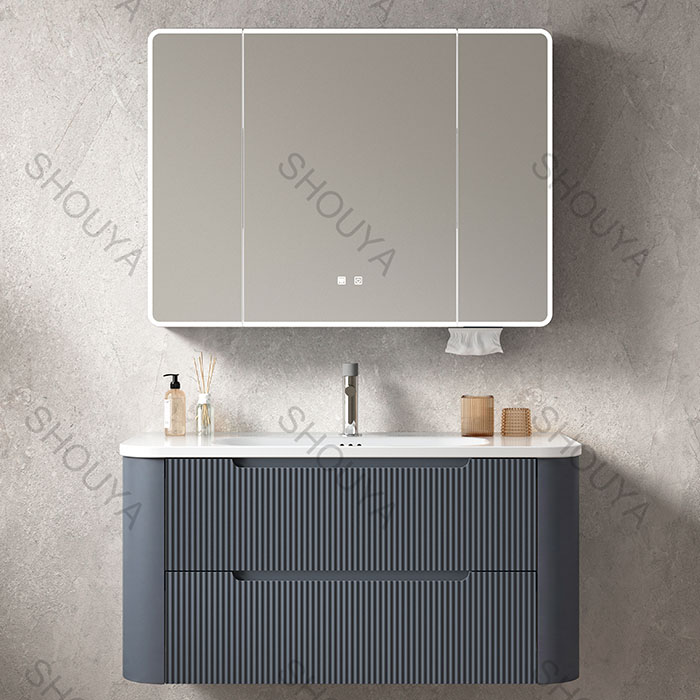
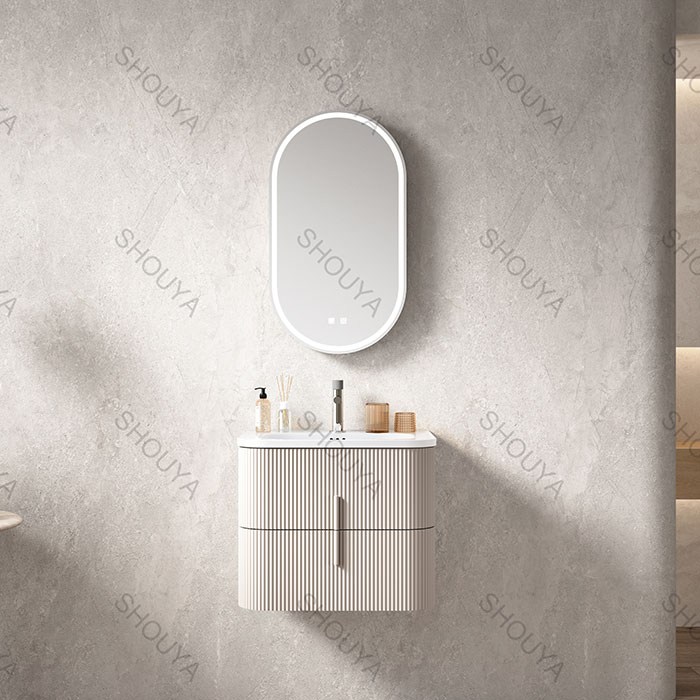
When selecting materials for 洗面台, one of the most frequently asked questions is: Is plywood good for bathroom vanity applications? For hotel projects, apartment developments, and commercial construction buyers, this decision directly impacts durability, moisture resistance, and long-term project performance. Instead of a simple yes or no answer, it is more important to understand when plywood is suitable and how professional manufacturers evaluate material selection for long-term use.
Why Bathroom Vanity Material Selection Matters?
Bathroom environments are high in humidity and temperature fluctuations. Over time, these conditions place continuous stress on cabinet materials.
If materials are not properly selected or processed, common issues include:
- Cabinet swelling or deformation
- Surface peeling or bubbling
- Reduced product lifespan
That is why in bathroom vanity sourcing, material selection is not only about appearance, but also about structural reliability and durability.
What is a Plywood Bathroom Cabinet? Is Plywood Good for Bathroom Vanity?
Plywood is an engineered wood made by pressing multiple layers of wood veneers in alternating grain directions. This structure provides strong stability compared to solid wood.
From a manufacturing perspective, plywood offers good structural strength and is widely used in custom furniture applications, including bathroom vanities. However, plywood is not naturally waterproof. Its performance in bathroom environments depends heavily on surface treatment and edge sealing quality. This means plywood can be used, but only under proper manufacturing standards.
Pros and Cons of Plywood in Bathroom Vanity Applications
From real manufacturing and project experience, plywood has both advantages and limitations.
メリット
Plywood provides strong structural stability and is less prone to cracking compared to solid wood. It is also suitable for customized production, making it ideal for project-based designs. In addition, plywood is more cost-efficient than solid wood, which makes it widely used in mid-range and engineering projects.
Limitations
The main limitation is moisture resistance. Without proper edge sealing and surface finishing, plywood may absorb moisture over time, leading to swelling at exposed edges. Therefore, plywood performance depends heavily on manufacturing quality rather than the material alone.
Bathroom Vanity Material Comparison
| 素材 | Water Resistance | Stability | Cost Level | 申し込み |
|---|---|---|---|---|
| 合板 | Medium (needs sealing) | 高い | ミディアム | Custom projects |
| PVC Board | Excellent | 高い | ミディアム | High-moisture environments |
| Solid Wood | 低い | ミディアム | 高い | Premium residential use |
| アルミニウム | Excellent | 非常に高い | ミディアム-ハイ | Hotel & commercial projects |
From a bathroom vanity manufacturer’s perspective, there is no single best material. The choice depends on project environment, budget, and expected lifespan.

Why Material Alone Is Not Enough in Project Applications?
In real procurement projects, material selection is only one part of the equation.
The actual performance of a bathroom vanity depends on manufacturing capability, including:
- Edge sealing technology
- Moisture-resistant surface treatment
- Structural reinforcement design
- Production consistency across batches
This is why many b2b buyers prefer working directly with a bathroom vanity manufacturer instead of focusing only on material selection.
Shouya Bathroom Vanity Manufacturing Solutions
として 浴室洗面台専門メーカー, Shouya provides material-flexible and project-oriented solutions for global B2B clients.
- Wide range of material: We support multiple material systems, including plywood, PVC, SPC, stainless steel, and aluminum bathroom furniture, allowing flexible selection based on project requirements.
- 厳格な品質管理: Beyond materials, we focus on manufacturing quality control, including moisture-resistant processing, edge sealing techniques, and structural optimization for long-term durability.
- Flexible sanitary ware customization: Shouya provides OEM and ODM customization services, allowing adjustments in size, structure, color, and design.
- Complete bathroom cabinet system: Integrated solutions combining bathroom vanities with LED mirrors are also available to ensure consistent design across full bathroom projects.
How to Choose the Right Bathroom Vanity Material
Rather than searching for a single “best material,” procurement decisions should focus on matching materials with project requirements.
- For budget and custom residential projects, plywood is acceptable with proper manufacturing quality
- For high-moisture environments, PVC or aluminum is more reliable
- For hotel and commercial projects, stability and consistency are top priorities
The best choice depends on the environment, budget, and supplier capability.
Conclusion:
Is plywood good for bathroom vanity? Plywood can be used for bathroom vanities, but only under proper manufacturing conditions.
- It is suitable for custom and mid-range projects
- It requires high-quality sealing and moisture protection
- It is not ideal for all high-humidity environments
For hotel, apartment, and large-scale construction projects, the key is not only material selection, but also choosing a reliable bathroom vanity manufacturer that ensures consistent quality and project execution.
If you are looking for a bathroom vanity manufacturer, OEM supplierあるいは hotel bathroom vanity solutions, working directly with a factory ensures better control over materials, manufacturing quality, and long-term project stability. Feel free to contact Shouya to get wholesale quality plywood bathroom vanity solutions with a fast quote.